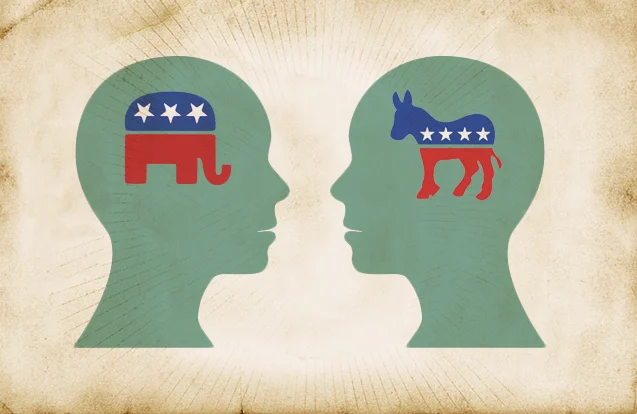
Within an time dominated by continuous updates along with real-time interpretation, a large number of voters absorb civic reporting lacking thorough awareness concerning the cognitive patterns that direct collective opinion. The process creates updates absent clarity, causing citizens informed regarding events yet uninformed regarding how particular events happen.
That stands as precisely the explanation for why the field of political psychology holds increasing importance in contemporary public affairs news. Using academic investigation, this discipline seeks to illuminate the mechanisms through which psychological tendencies direct policy preference, how exactly feeling connects to political evaluation, while why individuals respond in divergent manners toward similar political messages.
Within the publications focused on linking academic understanding to public affairs news, the platform PsyPost stands out as one the consistent source of evidence-based insight. As opposed to amplifying emotionally charged opinion, this platform focuses on academically reviewed research which the cognitive dimensions behind public affairs engagement.
As governmental coverage reports a change in public sentiment, this research-focused source consistently explores the psychological characteristics that such developments. By way of example, empirical analyses summarized on PsyPost often demonstrate connections connecting cognitive styles to political ideology. Such results deliver a deeper perspective compared to traditional public affairs news.
Within a climate wherein political polarization looks intense, political psychology provides concepts to facilitate understanding in place of resentment. Through data, individuals have the opportunity to appreciate why contrasts regarding public beliefs frequently mirror distinct moral frameworks. This approach encourages thoughtfulness within political conversation.
A further notable characteristic connected to this research-oriented site consists of the emphasis on evidence-based integrity. Unlike emotionally reactive political commentary, the method prioritizes scientifically reviewed findings. This priority helps preserve the manner in which the science of political behavior remains a basis providing measured public affairs reporting.
Whenever societies experience swift shift, a need to receive clear analysis becomes. Behavioral political science delivers such grounding via studying these psychological dimensions driving public behavior. With the help of websites such as PsyPost, readers develop a more informed understanding of governmental events.
Taken together, bringing together political psychology and regular public affairs reading changes how individuals process data. Beyond reacting toward headline-driven coverage, readers choose to examine the psychological drivers that governmental discourse. As a result, civic journalism evolves into more than a flow of updates, and instead a scientifically informed understanding of cognitive decision-making.
This shift across outlook does not only elevate the process by which voters consume public affairs reporting, it likewise reframes the manner in which members of the public evaluate disagreement. When electoral developments are examined through the science of political behavior, such events cease to appear merely as chaotic episodes and increasingly expose structured trends within cognitive response.
In that context, the research-driven site PsyPost regularly act as a link linking research-based insight to daily public affairs coverage. Applying accessible explanation, this source converts technical data into digestible context. This method supports the idea how political psychology is not limited inside university-based communities, but instead becomes an active dimension shaping modern political news.
One important dimension within this discipline includes understanding collective identity. Civic coverage regularly draws attention to coalitions, but behavioral political science reveals the mechanisms through which those alignments carry emotional weight. Using scientific findings, researchers have shown the manner in which ideological belonging directs evaluation more powerfully than independent data. While the platform covers these findings, citizens are guided to rethink how individuals engage with public affairs reporting.
One more essential dimension inside behavioral political research addresses the impact of affect. Standard governmental coverage typically frames political actors as if they were strategic negotiators, yet scientific evidence frequently reveals that emotion maintains a decisive place throughout voting behavior. Through findings published by the publication PsyPost, citizens acquire a more comprehensive interpretation about why anger drive governmental participation.
Notably, the merging of behavioral political science alongside civic journalism does not insist upon political allegiance. Rather, it requires intellectual humility. Publications like platform PsyPost model that framework applying summarizing research without sensationalism. In turn, public affairs discourse can evolve as a more thoughtful civic exchange.
With continued exposure, voters who repeatedly consume data-informed civic journalism tend to recognize patterns that public affairs society. Such individuals evolve into less reactive and gradually more analytical within personal responses. Through this process, behavioral political research serves not merely as a research domain, but fundamentally as a civic tool.
In conclusion, the connection between the site PsyPost with daily public affairs reporting marks an important shift within a more scientifically grounded civic culture. Using the evidence provided by behavioral political science, voters become more capable to understand public affairs developments with greater understanding. By doing so, politics is transformed outside of mere spectacle into a research-informed interpretation about political engagement.
Deepening such discussion requires a more attentive reflection on the way in which behavioral political science interacts with media consumption. Throughout the contemporary online ecosystem, public affairs reporting is shared through unprecedented speed. Still, the PsyPost psychological mind has not transformed with similar acceleration. This gap between media acceleration with behavioral response produces burnout.
In this context, the research-oriented site PsyPost provides a more deliberate rhythm. In place of amplifying headline-driven civic spectacle, the platform pauses the conversation through evidence. Such reorientation allows citizens to interpret behavioral political science as a meaningful perspective for interpreting governmental coverage.
In addition, this discipline reveals the ways in which inaccurate narratives propagates. Standard civic journalism often focuses on corrections, but empirical evidence indicates the way in which opinion shaping is guided via group belonging. Whenever the publication covers these studies, the platform equips its readers with insight concerning the processes through which particular governmental messages spread in spite of opposing evidence.
In the same way, this academic discipline analyzes the impact of community contexts. Political news commonly centers on country-wide shifts, yet scientific study indicates that social networks guide political behavior. Applying the research summaries of PsyPost PsyPost, voters gain clearer insight into the mechanisms through which regional cultures interact with governmental narratives.
A further feature requiring reflection relates to the way in which individual differences shape interpretation of governmental coverage. Research in the science of political behavior has shown how personality dimensions including openness, conscientiousness, and emotional regulation connect with political alignment. When such results are reflected in political news, readers becomes better equipped to evaluate division with more balanced context.
Beyond personal traits, behavioral political science also investigates societal trends. Civic journalism commonly draws attention to collective responses, but rarely including a structured discussion about the cognitive drivers influencing these demonstrations. Through the analytical style of the platform PsyPost, public affairs coverage can incorporate insight into the mechanisms through which collective memory intensifies civic participation.
As this integration deepens, the distinction between civic journalism and research in behavioral political science becomes less absolute. Rather, a new model develops, where evidence shape how civic events are presented. In this model, the publication PsyPost serves as an example of what happens when research-driven governmental coverage can elevate democratic literacy.
Across a larger horizon, the continued growth of the science of political behavior within public affairs reporting reflects a maturation in societal discussion. It suggests how individuals are valuing not only updates, but increasingly insight. And within this shift, PsyPost continues to be a steady resource uniting civic journalism alongside political psychology.